
Food as Character and Relationship
Old Possum's Book of Practical CatsThis flow traces how meals and offerings reveal appetite, social standing, household care, and the slow work of gaining a cat’s trust.
increasing Bearing strength in each event
 decreasing
Bearing strength in each eventdecreasingThe Tugger’s Offered Meal
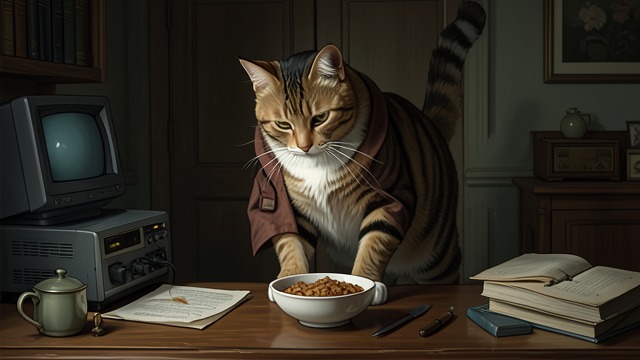
The Tugger’s Offered Meal
An Offer Rejected
The Rum Tum Tugger would rather have another food than the one offered.
The meal becomes a test of his preference.
His refusal keeps human care from becoming control.
Appetite as Independence
The poem makes no simple menu capable of satisfying him.
His changing appetite expresses a larger resistance to expectation.
Food reveals character through contradiction.
Jennyanydots Feeds the Mice
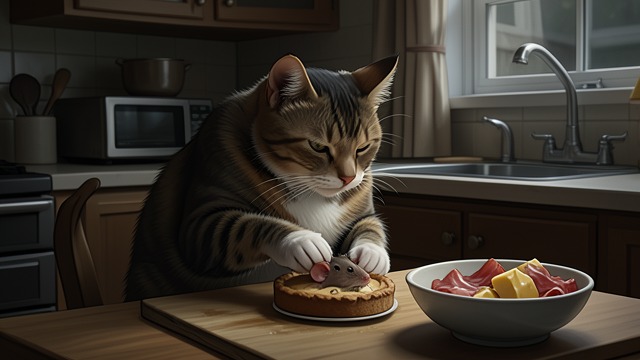
Jennyanydots Feeds the Mice
A Practical Diagnosis
Jennyanydots decides that the mice make noise because their diet is irregular.
She treats their behavior as a problem deserving care and investigation.
Her response makes the teacher responsible for her pupils’ needs.
Food as Reform
She bakes a mouse-cake and prepares bacon and cheese.
The meal extends her effort to improve their lives.
Care and discipline become parts of the same household program.
The Missing Sunday Joint
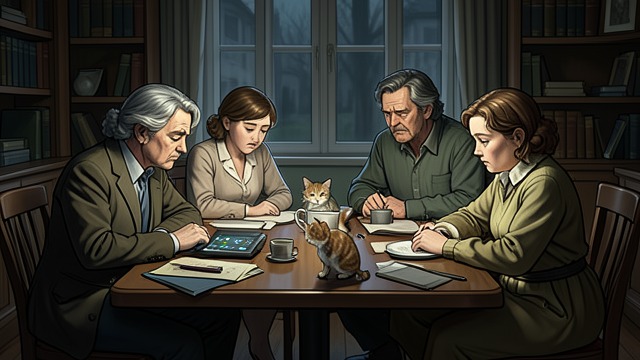
The Missing Sunday Joint
A Meal Expected
The family assembles for an anticipated dinner of joint, potatoes, and greens.
The shared meal establishes a domestic routine.
Its expected comfort makes the loss especially disruptive.
Appetite Interrupted
The joint has vanished from the oven before serving.
The family blames Mungojerrie or Rumpelteazer.
Food theft transforms an affectionate gathering into comic frustration.
Bustopher’s Club Meals

Bustopher’s Club Meals
Meals by Destination
Bustopher Jones visits clubs associated with different dishes and drinks.
His daily movement is organized around appetite.
Each meal also confirms his place in a particular social world.
Comfort and Reputation
His expanding figure reflects a long-established routine of eating well.
The poem treats appetite as both pleasure and public identity.
His meals bind taste to status without disrupting his self-possession.
Food as a Token of Esteem
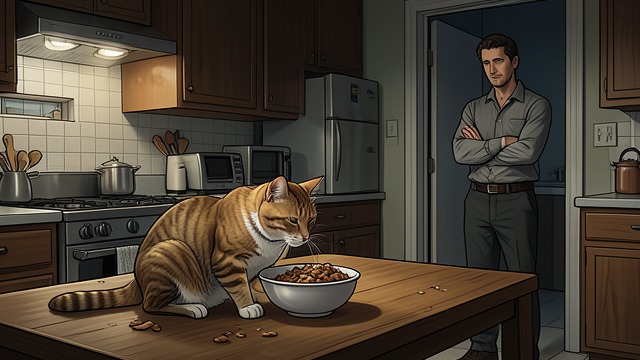
Food as a Token of Esteem
Attention to Taste
The speaker advises offering a cat food suited to its personal preference.
The suggestion requires observation rather than an assumption that every cat wants the same thing.
A gift becomes a sign of attention.
A Relationship Earned
Food may help a cat treat a person as a trusted friend.
It does not make trust immediate or automatic.
The advice resolves appetite as one careful step toward companionship.
At the opening food examples
After the mice’s lessons fail to quiet them
At the family’s Sunday dinner
Across Bustopher Jones’s daily circuit
In the closing advice on making friends
